For four years, the G20’s emerging economies used the rotating presidency to set an unprecedented agenda. With the United States now leading the forum, that direction is expected to change significantly.
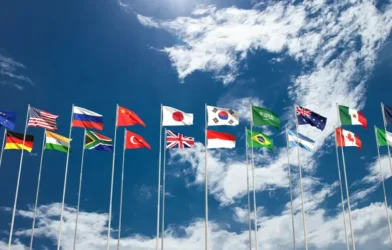
On December 1, the United States assumed the rotating presidency of the Group of 20 (G20). This transition follows an unprecedented sequence of four consecutive Global South–led presidencies (Indonesia, India, Brazil, and South Africa), during which the forum’s agenda—and even its membership—expanded and evolved. It also marks the completion of the G20’s first full cycle in which every member has served as chair at least once since the forum was elevated from a finance ministers’ meeting to leader-level summits in response to the 2007–2008 global financial crisis. For the first time since 2009, the G20 presidency has returned to the United States.
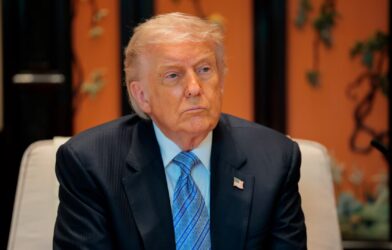
This is not merely a procedural handover. It signals a substantive and normative shift away from a broad, inclusive, development-oriented G20 toward a more focused and nationally driven vision. The administration of President Donald Trump has already indicated its intention to pursue a “back-to-basics” agenda, which is expected to significantly scale back many initiatives developed over the past four years. This shift raises deeper questions about the G20’s purpose, legitimacy, and effectiveness at a time when multilateral cooperation is under growing strain.
This moment also provides an opportunity to assess the G20’s trajectory and its role in global economic governance. The forum now faces what could be described, in metaphorical terms, as a confrontation with its own past ambitions, present limitations amid geopolitical tensions, and uncertain future direction. Whether it becomes leaner but functional or weakened by fragmentation and mistrust will reflect the broader state of multilateral cooperation in an increasingly divided world.

Broad Ambitions, Hard Constraints
The past four years of Global South leadership marked a distinct phase in the G20’s development. Never before had more than two emerging economies led the forum in uninterrupted succession, and this continuity proved meaningful. Long-overlooked priorities of emerging and developing economies were elevated and integrated into the G20 agenda. Despite different national contexts, these presidencies maintained notable thematic consistency across summits in Bali, New Delhi, Rio de Janeiro, and Johannesburg.
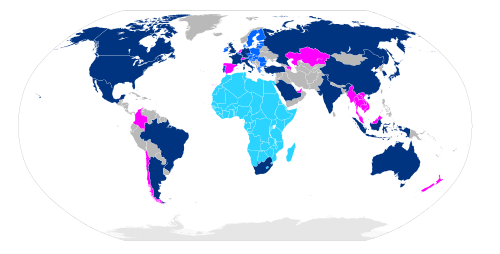
The first major theme was expanded inclusion and representation. India’s 2023 presidency achieved a landmark expansion by granting permanent G20 membership to the African Union, increasing the forum’s share of the global population from 65% to 80%. The scope of G20 engagement also widened significantly, and by South Africa’s 2025 presidency, the structure included twenty-two working groups, three task forces, and thirteen engagement groups covering areas such as labor and science.
A second major focus was debt distress and reform of the international financial system. Across the Global South, rising debt servicing costs, constrained fiscal space, and expensive capital flows intensified concerns. Indonesia and India emphasized strengthening multilateral development banks and accelerating progress toward the Sustainable Development Goals, while Brazil focused on reforming international financial institutions. South Africa prioritized sovereign debt restructuring and development finance, highlighting inefficiencies in existing mechanisms and the instability caused by prolonged debt negotiations.
A third priority was climate change, consistently framed by these presidencies as a development challenge rather than a purely environmental issue. Emphasis was placed on adaptation, energy access, and climate finance, with the argument that equitable transitions are essential for both political and economic sustainability. This approach differed from earlier G20 perspectives that focused primarily on emissions control and regulatory frameworks.
Finally, issues of inequality, social protection, and hunger became central topics. Brazil launched the Global Alliance Against Hunger and Poverty during its 2024 presidency, while South Africa commissioned a major report on global inequality and anchored its agenda around “Solidarity, Equality, and Sustainability.” Leaders’ statements increasingly acknowledged universal social protection systems and the economic risks associated with widening inequality.
At the same time, geopolitical tensions increasingly complicated consensus-building. Russia’s invasion of Ukraine in 2022 and escalating U.S.–China rivalry turned the G20 into a reflection of broader global divisions.
These tensions were especially evident during Indonesia’s 2022 presidency, when G7 members urged the exclusion of Russia from the summit. Indonesia resisted this pressure and ultimately secured a consensus leaders’ declaration after intensive diplomatic negotiations. However, the Bali declaration still reflected deep divisions, noting that while “most members strongly condemned the war,” other perspectives also existed.
Criticism of the G20 as merely a “talk shop” is therefore partly understandable, but it overlooks the forum’s actual purpose. The G20 is not an implementation body; rather, it is designed to build consensus among major economies and shape policy directions that are later implemented domestically or through institutions such as the IMF, World Bank, and United Nations. Its informality, once a strength during the global financial crisis, also limits its ability to produce binding commitments without favorable political conditions.
In this sense, the G20 functions less as an enforcement mechanism and more as an indicator of broader geopolitical trends. This was particularly evident at the Johannesburg summit.
Johannesburg and the G20 Today
The first G20 leaders’ summit held on African soil revealed both fragility and resilience within the forum. The November 2025 meeting in Johannesburg was marked by the absence of the United States, which chose not to send an official delegation—the first time a member state has fully abstained from participation. President Trump publicly boycotted the summit, citing unverified claims regarding the treatment of Afrikaner minorities in South Africa and rejecting the host’s thematic focus, which U.S. Secretary of State Marco Rubio characterized as “anti-American” and associated with “DEI and climate change.”
Ahead of the summit, U.S. officials reportedly resisted consensus-building efforts in preparatory meetings by objecting to references to terms such as “energy transition,” “equity,” and “universal healthcare.” The United States also applied pressure to prevent adoption of a final declaration without its approval, a strategy that ultimately failed.
In a departure from diplomatic convention, South African President Cyril Ramaphosa secured adoption of a 122-point leaders’ declaration at the start of the summit. The document addressed debt relief, climate finance, inequality, and critical mineral supply chains, and was endorsed by all G20 members except the United States and Argentina, which aligned with Washington by not formally endorsing it.
Several leaders emphasized continued engagement despite the U.S. absence. French President Emmanuel Macron stated that “it should not block us. Our duty is to be present, engage, and work all together because we have so many challenges.” South African Foreign Minister Ronald Lamola similarly argued that the G20 must demonstrate that global cooperation can continue with or without U.S. participation.
Johannesburg illustrated a forum under strain but not collapse. Most members remain committed to multilateral cooperation, and the G20 retains unique importance as the only annual platform bringing together systemically significant advanced and emerging economies at the leaders’ level. It is also more representative than institutions such as the G7 or the UN Security Council. However, the absence of the world’s largest economy raises serious questions about the forum’s long-term stability and relevance.
In its early phase, the G20 functioned effectively as a crisis-response body during the global financial crisis, coordinating liquidity support exceeding $4 trillion, resisting protectionism, strengthening financial regulation, establishing the Financial Stability Board, and reinforcing institutions like the IMF.
Since then, however, it has struggled to act as a coordinated steering body for the global economy. Its size and diversity make decision-making difficult, especially amid geopolitical tensions, and these constraints have become more pronounced over time. As President Macron noted in Johannesburg, the G20 may be “coming to the end of a cycle.”
The American G20: Leaner—or Just Thinner?
The Trump administration has signaled that its G20 presidency will focus on economic growth, deregulation, energy security, and technological innovation, while scaling back work on climate change, inequality, and development. This is expected to result in fewer working groups, fewer ministerial meetings, and reduced engagement with civil society and external stakeholders.
A more streamlined agenda is not necessarily negative. The G20 was originally designed as a relatively lean forum, and its recent expansion has arguably reduced coherence. However, the scale and nature of any contraction are critical.
During Trump’s first term, the G20 often functioned as a “G19+1” on issues such as climate policy following the U.S. withdrawal from the Paris Agreement. A similar pattern today—where the United States participates but diverges on select issues—would represent a moderate scenario.
However, this time the United States is also the host, giving it greater ability to shape the agenda directly. As a result, 2026 may become a more disruptive year for the G20, characterized by transactional diplomacy, tariff threats, and weaker institutional continuity.
There is also a risk that the agenda becomes overly nationalized. While all G20 chairs emphasize their own priorities, a focused agenda differs from one that abandons shared commitments entirely. If major issue areas such as climate change, energy transition, international finance, and taxation are excluded, the G20 risks losing its sense of collective purpose.
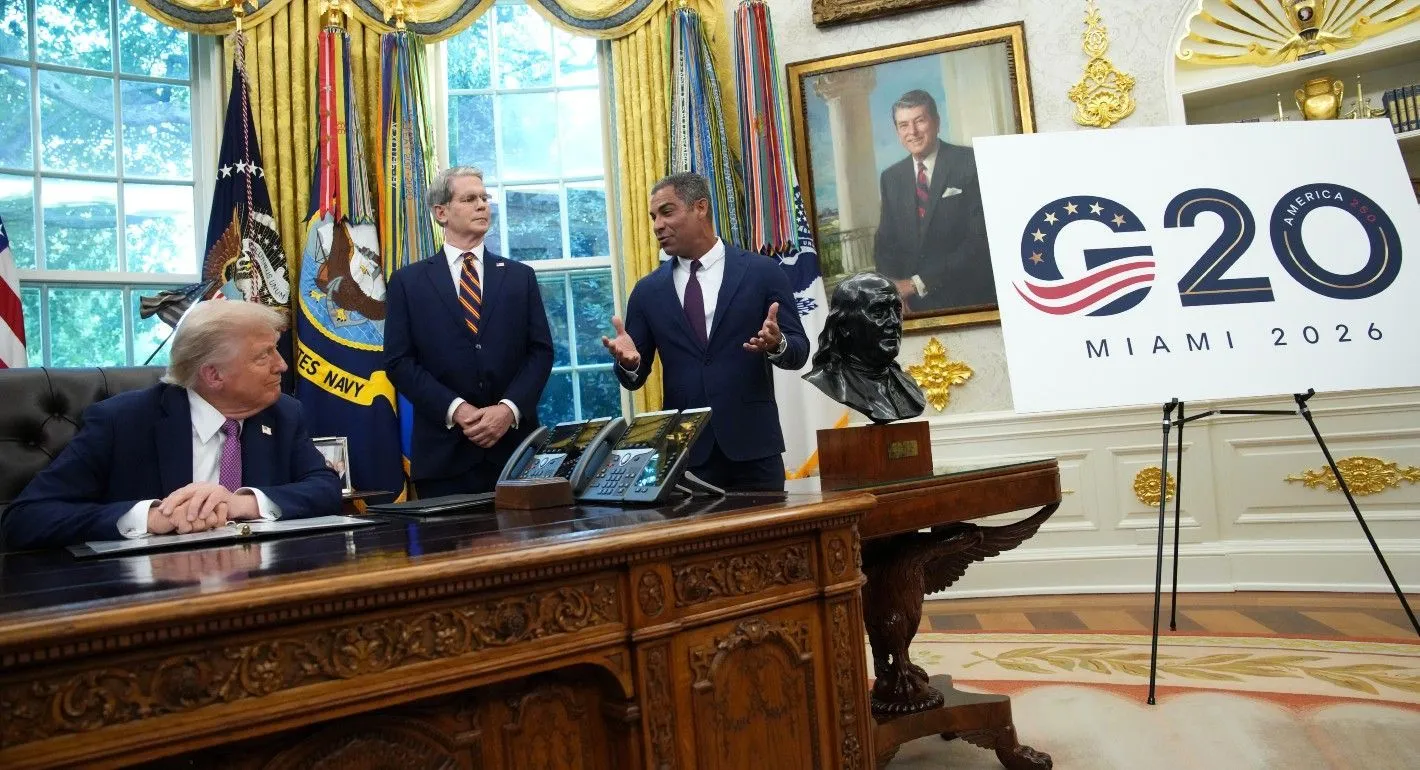
Early signs of disruption include the restructuring of the G20’s digital presence, where prior documentation was removed and replaced with a simplified page branded for the 2026 Miami summit. The announcement that South Africa would be excluded from the upcoming summit and replaced by Poland further underscores the degree of departure from previous practice.
Despite this, some areas of continuity remain possible. Sovereign debt restructuring is a shared concern across both recent Global South presidencies and the United States. Similarly, critical minerals may offer limited convergence, though with differing strategic motivations: development-focused in the Global South context and security-focused in the U.S. approach.
However, the United States may increasingly prefer bilateral or minilateral arrangements over G20 frameworks, especially where coordination with China complicates consensus.
Outside the G20, alternative coalitions are also emerging. South Africa, Brazil, and Spain have proposed an international panel on inequality modeled on the IPCC, while India, Brazil, and South Africa have sought to revive the IBSA Dialogue Forum as a platform for South–South cooperation.
A key concern is the precedent set by excluding members from G20 processes. If such practices become normalized, it could undermine trust in the institution and provoke reciprocal actions in future presidencies. For now, South Africa has opted not to escalate tensions, instead awaiting future leadership rotations.
Ultimately, the “America First” G20 will test whether the forum can withstand not only ideological divergence but also challenges to its foundational norms of continuity and inclusion. Even a more limited G20 can remain effective where interests align, but only if simplification does not turn into fragmentation and reform does not become disengagement.




Comments are closed