
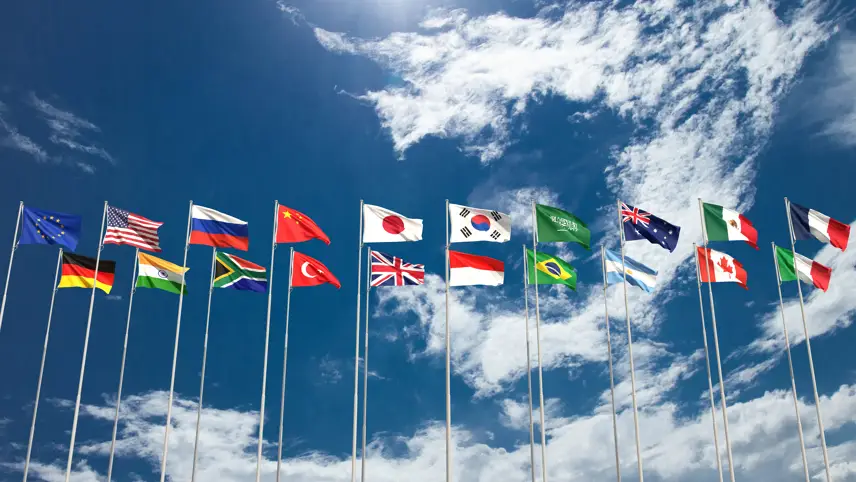
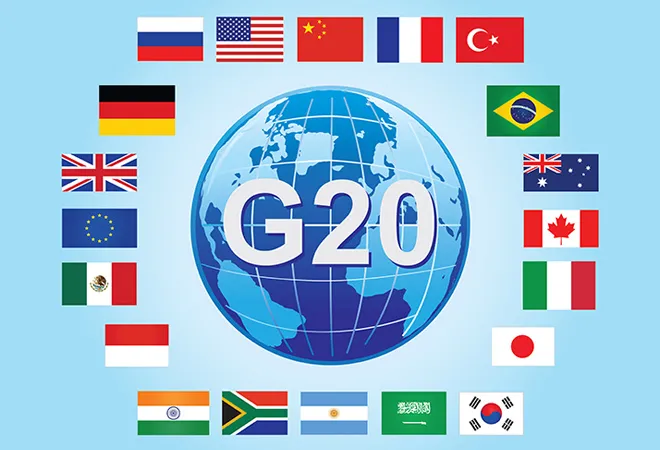
A new analysis from the World Resources Institute (WRI) finds that most G20 members are currently not on track to meet their 2030 emissions reduction commitments. Out of 14 G20 countries assessed, only five are on course to achieve their targets, while the remaining nine—including major economies such as the United Kingdom, United States, Canada, and Argentina—are lagging behind projected progress.
Collectively, these underperforming countries account for roughly 30% of global greenhouse gas emissions. More broadly, the entire G20 is responsible for more than three-quarters of annual global emissions, underscoring the group’s central role in determining the trajectory of global climate outcomes.
The analysis highlights that the United States, which contributes approximately 11.16% of global greenhouse gas emissions, has withdrawn its nationally determined contribution (NDC) following the Trump administration’s decision to exit the Paris Agreement framework. This move has significantly affected the country’s reported climate trajectory within the assessment.
In contrast, countries including Australia, Indonesia, Russia, South Africa, and Türkiye are identified as being on track to meet their current emissions reduction targets, according to the WRI study.
These 2030 targets were originally established under the first round of nationally determined contributions submitted between 2020 and 2021 as part of the Paris Agreement process. Of the G20 members, only 14 submitted sufficiently detailed projections for inclusion in the assessment.
Falling Behind on Climate Commitments
The WRI reports that projected 2030 emissions exceed official target levels in seven G20 economies. The gaps are particularly wide in countries such as the United Kingdom, South Korea, and Canada, where projected emissions are at least 25% higher than the levels required to meet their commitments.
Argentina is estimated to need sustained emissions reductions of around 1% annually to remain aligned with its 2030 target. Brazil would require a much steeper annual reduction rate of approximately 6.5% to stay on track.
Similarly, both the United Kingdom and Canada would need to accelerate emissions reductions to roughly 5.4% and 5.5% per year, respectively, to close the gap between current trajectories and their stated goals.
For the European Union, Mexico, and Japan, progress would need to accelerate significantly—roughly doubling current reduction rates—to achieve their 2030 targets, according to the analysis.
The WRI emphasizes that even full global compliance with existing 2030 NDCs would still be insufficient to limit global warming to 1.5°C, indicating a substantial ambition gap.
This concern is echoed in broader international assessments. The Organisation for Economic Co-operation and Development (OECD) warned in a previous analysis that, without stronger action, global temperatures could rise by as much as 6°C above pre-industrial levels by 2100 under certain projection scenarios. This estimate assumes current policy trends continue across OECD member economies.

In response, the OECD has called for countries to significantly strengthen their 2035 climate commitments, formally integrate net-zero targets into national legislation, and reaffirm multilateral cooperation as the foundation of global climate action.
The WRI similarly stresses that further progress is urgently needed. It calls for stronger emissions reductions, improved alignment with existing targets, and greater ambition in future national climate plans. It also identifies the December 2026 reporting deadline for biennial transparency reports as a critical moment for countries to demonstrate meaningful progress toward their commitments.








Comments are closed