This material would not have been possible without the expert insights of Parimatch specialists, who, as part of their professional duties, continuously monitor the nuances of regulation across all countries, including those in the G20.
The Big Picture
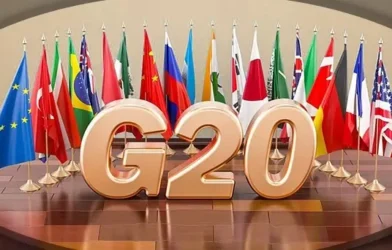
The G20 brings together the world’s largest economies, and when it comes to online gambling and sports betting, these 19 countries plus the European Union represent almost every possible regulatory philosophy. Some have built sophisticated licensing frameworks generating billions in tax revenue. Others maintain outright bans rooted in religious or cultural tradition. Many occupy an uncomfortable middle ground where the law is ambiguous, offshore operators flourish, and governments are only now beginning to formalize their position.
The global online gambling market was valued at roughly $78 billion in 2024 and is projected to more than double by the end of the decade. The G20 countries account for the majority of that volume, making their regulatory choices consequential not just domestically but for the entire industry. Understanding how each of these economies approaches online casinos and sports betting reveals a great deal about their broader attitudes toward consumer protection, taxation, and the relationship between government and private enterprise.
United Kingdom: The Gold Standard of Regulation
The United Kingdom operates what is widely regarded as the most sophisticated online gambling regulatory framework in the world. The UK Gambling Commission, established under the Gambling Act 2005, licenses and supervises all commercial gambling operators. Obtaining a UKGC license is expensive, demanding, and time-consuming, which is precisely the point.
In recent years the Commission has tightened its approach considerably. Stake limits on online slots were introduced, capping spins for players under 25. A new gambling levy came into force in 2025, requiring operators to contribute between 0.1% and 1.1% of gross gambling revenue to fund harm prevention and research. Direct marketing rules were overhauled, with fresh restrictions taking effect in May 2025.
The UKGC has shown it will use its enforcement powers aggressively. Multiple major operators have faced fines running into the tens of millions of pounds for failures in anti-money laundering controls or social responsibility obligations. Unlicensed offshore sites are not permitted to advertise to UK residents, and the Commission maintains a public blacklist of illegal operators.
For players, accessing an unlicensed offshore casino is not technically a criminal offense, but those sites operate in a legal grey zone without consumer protections. The UK model is fundamentally player-first: every licensed operator must maintain segregated player funds, publish transparent terms, and provide access to self-exclusion tools. The national self-exclusion system, GamStop, allows a player to block themselves from all licensed UK gambling sites simultaneously.
Germany: A Complicated Road to Regulation
Germany spent years operating under one of Europe’s most inconsistent gambling regimes, with a patchwork of state-level rules that created significant legal uncertainty. The Interstate Treaty on Gambling, which came into force in 2021, finally created a national framework for online sports betting and casino games.
The Joint Gambling Authority of the States, known by its German acronym GGL, serves as the central licensing body. Online slots and table games are now licensable, though with notable restrictions: monthly deposit limits of 1,000 euros per player, mandatory breaks between gaming sessions, and a ban on simultaneous multi-table play. The licensing process has been criticized by some operators as cumbersome, but the market has gradually stabilized.
The central player exclusion database OASIS is a cornerstone of the German system. Once a player self-excludes, every licensed operator must deny them access. Advertising rules are strict, with promotional content prohibited during prime-time television hours and around sporting events.
Germany represents a case where a major economy took a long time to arrive at coherent regulation, partly due to the federal structure of the country and the differing interests of individual states. The result is a legal market that works but remains more restrictive than some neighbouring jurisdictions.
France: State Monopoly Meets Liberalization
France opened its online gambling market to competition in 2010, but in a highly structured way. The Autorite Nationale des Jeux, known as ANJ, oversees all licensed operators. Online sports betting and poker are fully licensed. Online casino games, however, including slots and roulette, remain restricted to the state monopoly operator and are not available through private licensees.
This creates a curious situation where French players can legally bet on sport or play poker through licensed private operators, but must go to offshore unlicensed sites if they want casino-style games. The ANJ actively works to block unlicensed operators and has pursued payment blocking as an enforcement tool. The partially closed nature of the market has long been criticized by industry groups, who argue it simply drives players to unregulated alternatives.
French operators pay a levy on stakes rather than gross gambling revenue, which is considered unusual by international standards and limits the profitability of operating within the licensed market. Reform discussions continue, but the full liberalization of casino gaming has not yet materialized.
Italy: A Mature and Tightly Controlled Market
Italy has one of the most developed and tightly controlled online gambling markets in the world. The regulator ADM (Agenzia delle Dogane e dei Monopoli) launched a comprehensive new licensing tender in late 2025, resetting the compliance bar for the entire market.
Under the new concession regime, operators must hold or commit to obtaining multiple international certifications, including ISO 27001 for information security management. Servers and technological infrastructure must be located in Italy or another EEA state. The annual license fee is structured as 3% of net margin plus 8% of the balance held in gaming accounts.
Italy restricts gambling advertising heavily, with a near-total ban on promotional content in force since 2019. Sports betting and casino games are both available through the licensed market. Italian players have access to a wide variety of legal products, but the operating environment is deliberately demanding to ensure only serious, well-resourced operators can participate.
United States: A Market in Transformation
The United States represents the most complex gambling regulatory landscape of any G20 member, because authority is divided between the federal government and 50 individual states.
The decisive turning point was the Supreme Court’s 2018 ruling that struck down the federal ban on sports betting. Since then, 39 states plus Washington D.C. have legalized some form of sports wagering. The pace of adoption has been remarkable. States including New York, Ohio, Illinois, and New Jersey now handle billions of dollars in sports bets every month.
Online casino gaming, however, has moved far more slowly. As of 2025, only seven states have fully legalized iGaming: New Jersey, Michigan, Pennsylvania, Connecticut, Delaware, West Virginia, and Rhode Island. Each state runs its own licensing regime, sets its own tax rates, and determines which game types are permitted. New Jersey’s Division of Gaming Enforcement is generally regarded as the most rigorous, demanding extensive background checks, technical audits, and responsible gambling compliance.
The two most populous states, California and Texas, remain without legalized online gambling. Legislative efforts in both states stalled again in 2025, making a legal launch unlikely before 2027 at the earliest. The sheer scale of those potential markets means the industry watches them closely.
Federal oversight of online gambling remains limited to areas like wire fraud and financial transactions, leaving the regulatory substance entirely to states. This fragmentation means an operator wishing to serve the full US market must navigate dozens of separate licensing processes, compliance obligations, and tax regimes.
Canada: Ontario Leads the Way
Canada’s gambling regulation is primarily a provincial matter. For most of the country’s history, each province operated through a state-run monopoly. The landmark change came when Ontario launched a private operator licensing model in 2022, allowing commercial operators to compete alongside the existing government platform.
Ontario’s model has become a widely studied case study in effective market design. Operators pay a 20% tax on gross gaming revenue, are required to implement responsible gambling tools, and must integrate with the province’s self-exclusion system. More than 70 operators had received approval by the time the market matured.
Other provinces have not moved as quickly. British Columbia, Quebec, and others continue to operate through government monopolies for online casino gaming, though some allow licensed sports betting. The contrast between Ontario’s dynamic competitive market and the more restrictive approaches elsewhere in the country illustrates how provincial autonomy can produce very different outcomes within a single federal system.
Australia: Sports Betting Yes, Casino Games No
Australia has drawn one of the clearest and most distinctive lines among G20 nations: sports betting is legal and regulated through licensed domestic operators, while online casino gaming is explicitly prohibited under the Interactive Gambling Act of 2001.
The Australian Communications and Media Authority actively blocks unlicensed offshore casino sites and works with internet service providers and payment processors to enforce this. For individual players, however, accessing offshore sites is not itself a criminal offense, creating a practical gap between the law and its enforcement.
The regulated sports betting market is substantial and competitive. The national self-exclusion register BetStop, launched in 2023, allows players to block themselves from all licensed betting operators simultaneously. Since 2024, credit card use for online gambling has been banned, with financial institutions required to block such transactions.
Australia’s approach represents a deliberate policy choice to accept the consumer demand that exists for sports betting while maintaining a firm position against casino-style gaming online. Whether that position will hold as offshore casino sites become increasingly accessible remains a live debate.
Japan: One of the World’s Largest Grey Markets
Japan presents one of the more remarkable paradoxes in global gambling. The country has some of the world’s most enthusiastic gamblers, a deeply embedded pachinko industry worth tens of billions of dollars annually, and legal public lotteries and horse racing. Yet online casinos and most forms of sports betting remain formally prohibited.
The legal ambiguity around offshore online casinos has created a grey market of enormous scale. Japanese players routinely access offshore-licensed casino sites, and enforcement against individual players is essentially nonexistent. Offshore operators serving Japanese players operate in a legally complicated space, as they are not licensed by Japanese authorities but face limited practical enforcement.
The government has moved toward partial reform with the legalization of integrated resort casinos, though the rollout has been slow. Online sports betting on horse racing through designated operators is permitted. The broader liberalization of online gambling has not occurred, leaving Japan as one of the largest unregulated consumer markets in the world.
South Korea: Strict Prohibition with One Exception
South Korea takes a strict approach to gambling, with nearly all forms prohibited for Korean nationals. The single notable exception is Sports Toto, the state-run sports betting platform that covers football, basketball, and other sports. Koreans can legally participate in that product and in overseas casinos when travelling, but domestic online casino gaming is banned.
Enforcement against offshore operators serving Korean players has become more active in recent years, with payment blocking and ISP restrictions deployed as tools. The illegal gambling market is nonetheless estimated to be large, driven by demand for products the legal market does not supply.
China: Total Prohibition
China maintains one of the world’s most restrictive gambling environments. Online casinos, sports betting, and virtually all forms of gambling are prohibited on the mainland. Players who gamble online can face administrative penalties, and operating or organizing illegal gambling carries severe criminal consequences. Even advertising or facilitating payments for online gambling can lead to prosecution.
The great exception is Macau, the Special Administrative Region where land-based casino gambling is the backbone of the economy. Macau generated nearly $23 billion in gambling revenue in 2023. However, Macau has explicitly prohibited online casino gaming, and no licenses have been issued for internet-based gambling in the territory.
VPN use to access offshore gambling sites is widespread but officially prohibited. Enforcement is active, particularly against organized gambling operations that process large volumes. For individual players the practical risk varies, but the legal position is unambiguous: online gambling is not permitted.
India: A Patchwork of State Laws
India’s constitutional structure places gambling regulation at the state level, producing a highly fragmented landscape. Games of skill, including rummy and fantasy sports, are generally treated differently from games of chance, and this distinction drives much of the policy debate.
States like Sikkim and Nagaland have created licensing frameworks for certain online gaming products. Others have moved to ban online games of chance explicitly. The central government’s 2025 amendments to gambling-related legislation clarified some boundaries but stopped short of creating a national licensing framework for online casino gaming.
Fantasy sports is a massive market in India, with platforms like Dream11 attracting tens of millions of users. These are treated as games of skill by courts and regulators in most states, allowing them to operate commercially. Traditional casino-style games face much more restriction.
The Indian government has signaled interest in creating a more unified national regulatory approach, but no comprehensive framework has been enacted. The result is one of the world’s largest gaming populations operating under a set of rules that varies dramatically depending on which state a player happens to be in.
Brazil: The Biggest Regulatory Story of 2025
Brazil’s formal entry into regulated online gambling is arguably the most significant market development anywhere in the world in 2025. After years of legislative delay, the country’s regulatory framework went live under the Secretariat of Prizes and Bets. Licensed operators can now offer sports betting and online casino games to Brazilian players.
The entry barriers are deliberately high. The federal license fee is approximately 6 million US dollars, which has positioned the market as a destination for the largest international operators rather than smaller entrants. More than 200 applications were filed when the process opened.
Brazil’s population of over 200 million, combined with high smartphone penetration and a demonstrated appetite for sports betting, makes this one of the most commercially significant regulated markets to open anywhere in the world in recent years. The practical and enforcement challenges of a market this size are substantial, but the direction of travel is clearly toward a structured, taxed, licensed industry.
Argentina: Provincial Fragmentation
Argentina follows a provincial model similar in some respects to the United States. Individual provinces can authorize and license online gambling within their territories. Buenos Aires province and the city of Buenos Aires have both created licensing frameworks. Other provinces have moved at different speeds.
The result is a market with real licensed operators serving Argentine players, but without the coherent national framework that would make it truly comparable to the UK or Italian models. Cross-provincial consistency on responsible gambling tools, advertising standards, and player protection remains limited.
Mexico: De Facto Grey Market
Mexico’s gambling law dates to 1947, long before the internet existed, and has never been comprehensively updated to address online gambling. The Secretaria de Gobernacion has issued licenses to some operators under existing land-based frameworks, creating a small number of domestically licensed online products. However, most of the online gambling consumed by Mexican players comes from offshore operators who are not licensed by Mexican authorities and face limited enforcement.
Mexico represents one of the clearest examples among G20 nations of a large, active consumer market operating largely in legal grey space, not because gambling is explicitly banned but because the regulatory infrastructure has not caught up with technological reality.
Saudi Arabia: Total Ban
Saudi Arabia prohibits all forms of gambling under Islamic law. Online casinos, sports betting, and any form of wagering are illegal. Enforcement is active and penalties are significant. There is no licensing framework and no prospect of one being developed under the current governance structure.
Russia: State Control and Selective Access
Russia took the unusual step of banning online gambling almost entirely in 2006, restricting casino operations to designated physical gambling zones in remote regions. Accessing offshore online gambling sites is technically prohibited, and payment processing for gambling transactions is blocked.
A small number of state-sanctioned online sports betting operators hold licenses and are permitted to operate within Russia, contributing to a sports betting levy that funds sporting organizations. This creates a narrow legal online betting market sitting alongside a much larger practical grey market of Russian players accessing offshore sites through VPNs and alternative payment methods.
Turkey: Betting in Crisis
Turkey licenses a small number of domestic sports betting operators through Spor Toto, the state entity. Online casino gaming is prohibited. As discussed at length elsewhere, 2025 brought Turkey’s largest-ever sports integrity crisis, with hundreds of referees and players found to have placed illegal bets, raising fundamental questions about the relationship between legal betting markets, illegal offshore platforms, and the integrity of competition.
Indonesia and South Africa: Outright Prohibition and Partial Opening
Indonesia, the world’s fourth most populous country and a G20 member, prohibits all forms of gambling under both criminal law and Islamic legal principles. Enforcement is active, though a large illegal and offshore-facing market exists.
South Africa maintains a more nuanced position. Land-based gambling is licensed and legal. Online sports betting through licensed operators is permitted. Online casino gaming, however, remains prohibited, and South Africa has not yet created a licensing framework for internet-based casino products despite longstanding industry lobbying for reform.
The European Union as a G20 Participant
The EU does not itself regulate gambling, which remains a matter of national competence for member states. However, EU law influences gambling regulation significantly through requirements related to free movement of services, anti-money laundering, and data protection.
The single most consequential development for 2026 is the application of the EU’s new Anti-Money Laundering Regulation (AMLR), which creates a directly applicable pan-European rulebook replacing the previous patchwork of national implementations. Gambling operators serving EU markets must now align with a single set of KYC and AML requirements rather than navigating 27 different national frameworks.
Finland is opening its online gambling market to private competition for the first time, with a licensing window opening in March 2026 and a planned market launch in mid-2027. The planned tax rate of 22% on gross gambling revenue is among the highest in Northern Europe.
What the G20 Landscape Tells Us
Several patterns emerge from looking across the G20 as a whole.
First, the direction of travel is clearly toward regulation rather than prohibition. Even countries that historically maintained bans, such as Brazil, are moving toward licensed markets because the fiscal argument for capturing gambling tax revenue is becoming impossible to ignore.
Second, responsible gambling has shifted from a voluntary operator commitment to a mandatory compliance requirement. The most advanced markets require automated behavioral monitoring, mandatory self-exclusion systems, deposit limits, and documented evidence that operators are actively intervening when players show signs of harm.
Third, the grey market remains enormous. The combined population of G20 countries where online casino gaming is technically illegal but practically accessible through offshore sites runs into the billions. Players in China, Japan, South Korea, Indonesia, Saudi Arabia, and Russia regularly access offshore platforms, creating a massive unregulated and untaxed market that coexists with whatever formal structures exist locally.
Fourth, sports betting has liberalized faster and more broadly than casino gaming almost everywhere. The cultural and political barriers to licensing sports betting are lower in most societies than the barriers to licensed online casinos, which carry stronger associations with problem gambling and social harm.
Fifth, the licensing landscape has become more demanding everywhere. The era of cheap offshore licenses providing global market access is fading. National licensing requirements are proliferating, and regulators are becoming more sophisticated in their ability to detect and block unlicensed operators through payment processing restrictions and ISP blocking.
The G20 countries will continue to diverge in their specific approaches, but the overall trajectory points toward more markets, more licenses, more tax revenue, and more complex compliance requirements. For operators, the opportunity is substantial. So is the cost of getting the regulatory piece wrong.



Comments are closed