
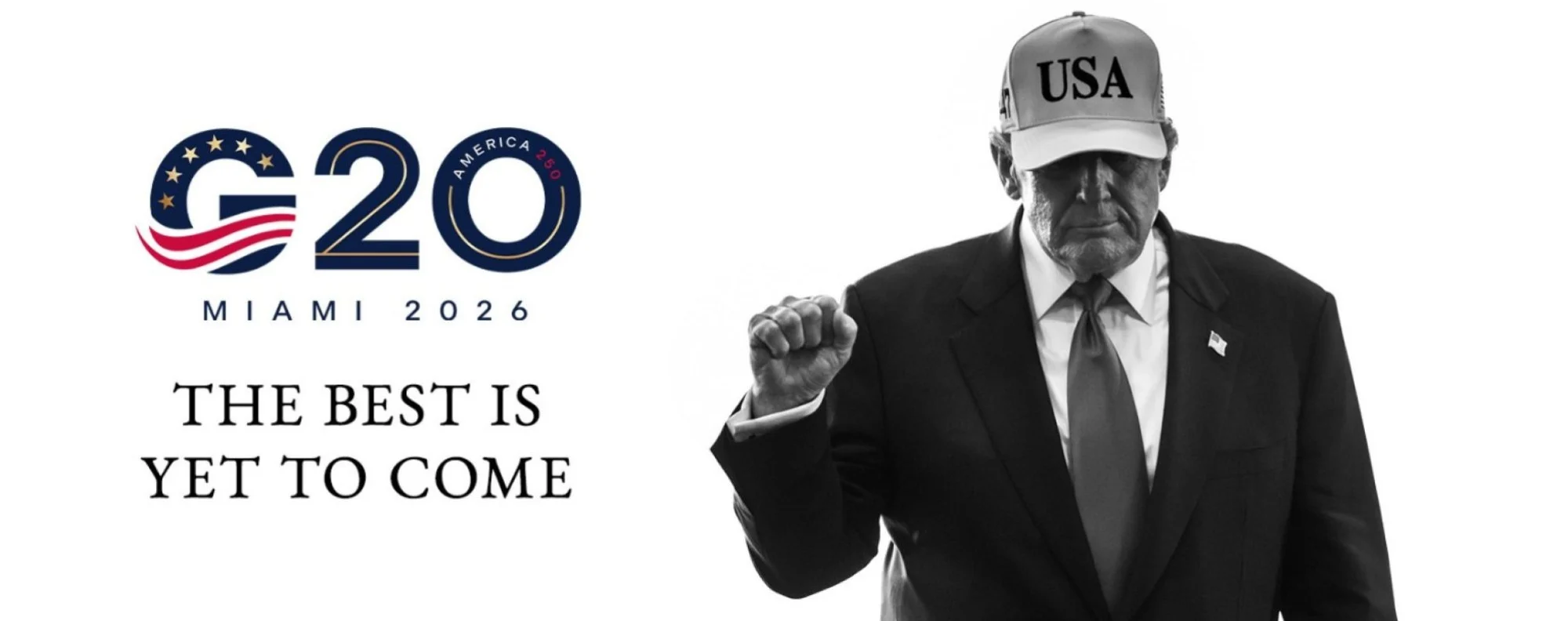
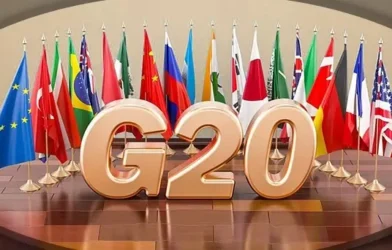
In 2026, the United States will host the world’s 20 largest economies for the first time since 2009. This summit will coincide with America’s 250th anniversary and will serve as an opportunity to highlight the values of innovation, entrepreneurship, and perseverance that have shaped the country’s success. These principles are presented as a model for global prosperity. The United States intends to showcase these ideas when it hosts the G20 Leaders’ Summit in December 2026 in one of its most prominent cities, Miami, Florida.
Under the leadership of President Trump, the G20 will operate through four working groups focused on advancing progress across three main priorities: reducing regulatory burdens, strengthening affordable and secure energy supply chains, and promoting cutting-edge technologies and innovation. The first Sherpa and Finance Track meetings are scheduled to take place in Washington, DC, on December 15–16, followed by a series of additional meetings throughout 2026. As the global economy adjusts to technological transformations such as artificial intelligence and moves beyond ideological debates surrounding green energy, the President is positioned to lead this process.
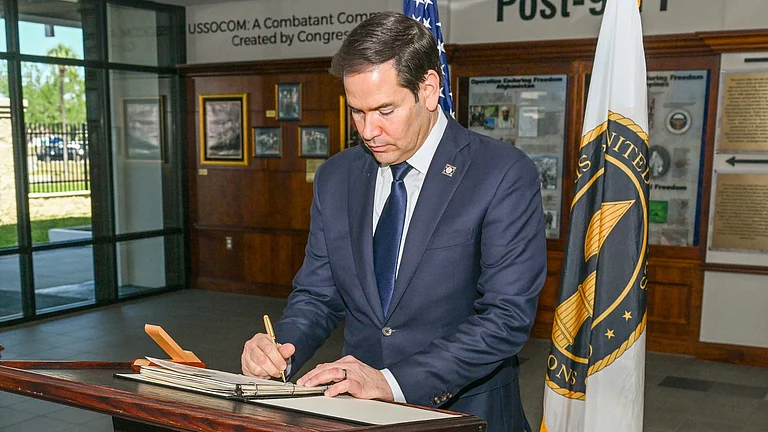
The United States will invite friends, neighbors, and international partners to the American G20. The gathering will include the world’s largest economies as well as emerging partners and allies at the global table. Notably, Poland—once behind the Iron Curtain and now among the world’s 20 largest economies—will join the G20, taking what is described as its rightful place. Poland’s development is presented as evidence that focusing on future growth, rather than past grievances, leads to success. It is also framed as demonstrating how cooperation with the United States and American companies can foster shared prosperity and economic growth.
This stands in contrast to South Africa, which is hosting this year’s G20.
South Africa entered the post-Cold War period with strong institutions, advanced infrastructure, and widespread international goodwill. It is rich in natural resources, possesses some of the world’s most productive agricultural land, and is strategically located along major global trade routes. With Nelson Mandela as its leader, it was widely seen as a country that understood reconciliation and private-sector-driven economic growth as the foundation for shared national prosperity.
However, it is argued that subsequent leadership shifted away from reconciliation toward redistribution-focused policies, which are described as discouraging investment and prompting skilled citizens to leave the country. Racial quota systems are portrayed as weakening the private sector, while corruption is described as undermining the state.
According to these claims, South Africa’s economy has stagnated under a heavy regulatory system driven by identity-based grievances, placing it outside the group of the world’s 20 largest industrialized economies.
Instead of addressing its internal challenges, the current ANC-led government is accused of blaming its own citizens and the United States. It is alleged that, as highlighted by President Trump, the government has adopted discriminatory practices and has tolerated violence against Afrikaner citizens as part of its domestic policy framework. It is further claimed that the government seeks to benefit itself while the broader economy struggles, and that citizens face violence, discrimination, and uncompensated land seizures. The country’s former ambassador to the United States is described as having been openly hostile toward America. Its relationships with Iran, engagement with Hamas sympathizers, and alignment with U.S. adversaries are presented as distancing it from traditional Western partners.
These tensions are also said to have influenced South Africa’s leadership of the G20 this month, which is characterized as focusing on division and ideological agendas rather than economic growth. It is claimed that South Africa prioritized climate change, diversity and inclusion, and aid dependency in its working groups, ignored U.S. objections to consensus statements, blocked input from the United States and other countries during negotiations, disregarded diplomatic efforts in good faith, and exposed U.S. officials involved in the process. These actions are described as having damaged the G20’s reputation.
For these reasons, it is stated that President Trump and the United States will not extend an invitation to the South African government to participate in the G20 during its presidency. It is emphasized that while disagreement in good faith is acceptable, actions viewed as dishonest or obstructive are not.
The United States expresses support for the people of South Africa, but not for what it describes as the current ANC-led government, and states it will not accept its continued conduct. It further asserts that once South Africa undertakes necessary reforms and is prepared to rejoin the community of prosperous and free nations, it will again be welcomed. Until then, the United States will continue moving forward with a redefined G20.





Comments are closed