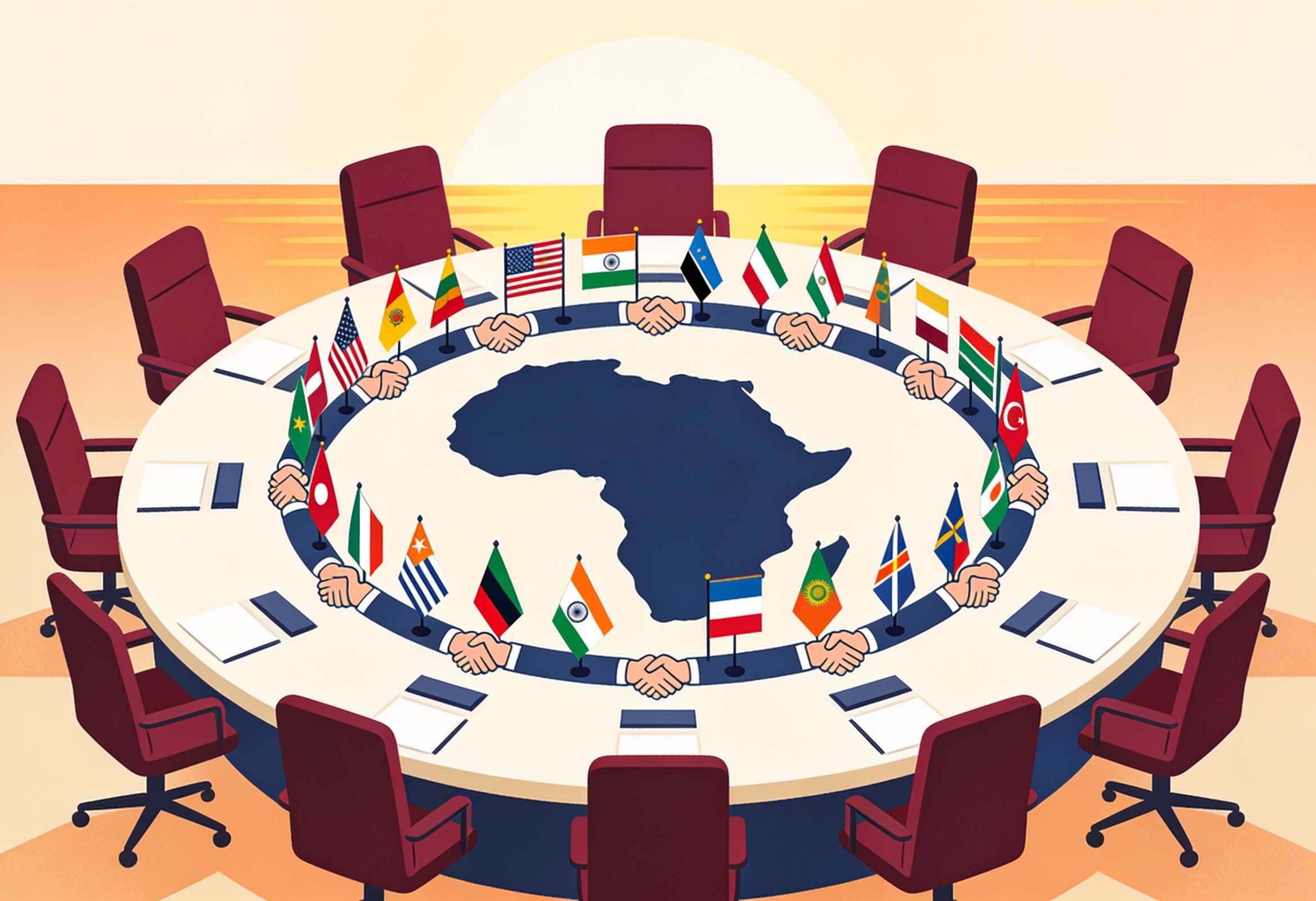
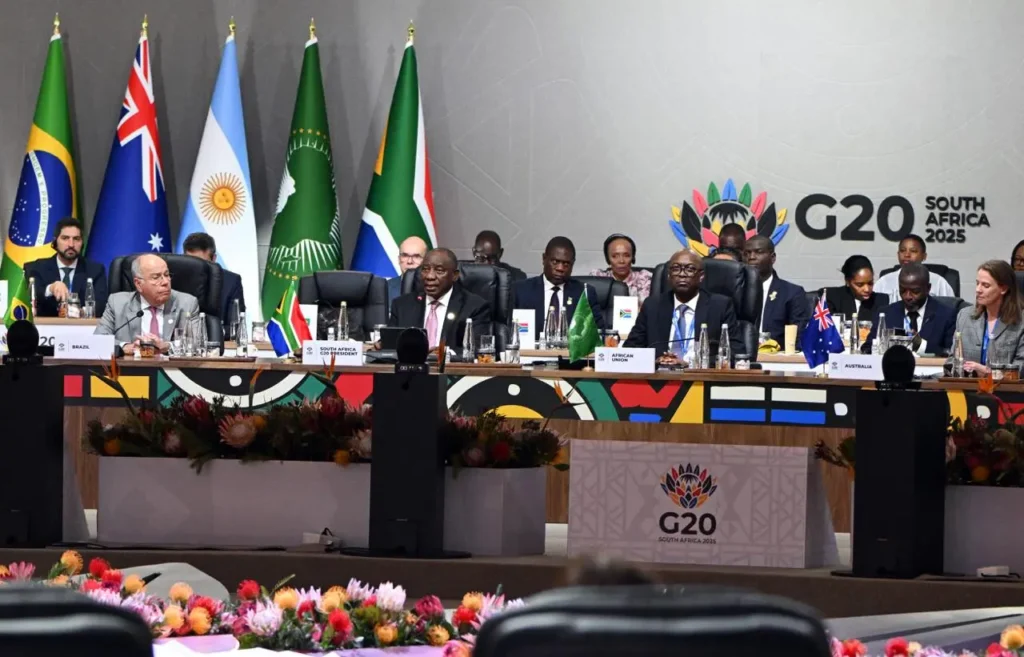
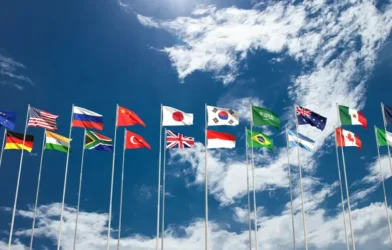
G20 leaders met in Johannesburg for a two-day summit hosted by the South African presidency. This marked the first time a G20 summit was held on the African continent.
Operating under the theme “solidarity, equality and sustainability,” leaders participated in three working sessions focused on global challenges and priorities, including sustainable economic growth, development, and financing.
The Johannesburg Leaders’ Declaration emphasized that the summit took place in a context of rising geopolitical and geoeconomic tensions, ongoing conflicts and wars, increasing inequality, global economic uncertainty, and growing fragmentation. Despite these challenges, leaders reaffirmed their commitment to multilateral cooperation as the primary tool for addressing shared global problems.
The European Union was represented by European Council President António Costa and European Commission President Ursula von der Leyen. The EU described itself as a reliable and predictable partner committed to cooperation within the G20 framework.
Inclusive and Sustainable Economic Growth
Debt sustainability
G20 leaders recognized that debt vulnerabilities can significantly limit the fiscal space of countries—especially low-income economies—reducing their ability to reduce poverty, address inequality, and invest in development and growth. They committed to supporting multilateral efforts to address debt challenges and noted the voluntary use of tools such as crisis-resilient debt clauses and liability management operations.
Taxation
Leaders emphasized the importance of international tax cooperation, in line with previous G20 ministerial outcomes. They supported further exploration of global mobility and the relationship between tax policy, inequality, and economic growth. The EU reiterated its support for a fair, rules-based international tax system as part of closing the global financing gap for the Sustainable Development Goals (SDGs).
International Financial Architecture
G20 leaders agreed on the need to make the international financial system more inclusive, efficient, and representative, with a focus on easing debt burdens that prevent developing countries from investing in long-term growth.
They also highlighted the central role of multilateral development banks (MDBs) in supporting poverty reduction, sustainable development, and economic growth. Key priorities included:
- Improving coordination between MDBs and climate/environmental funds
- Mobilizing both public and private investment for development
The EU emphasized its major role in development finance, noting that it contributes a significant share of global aid and plays a leading role in debt restructuring efforts through international frameworks.
Trade
Leaders reaffirmed the importance of trade as a driver of global economic growth and development, particularly for developing regions. They stressed the central role of the World Trade Organization (WTO) and the importance of maintaining a rules-based multilateral trading system.
The EU highlighted its position as one of the world’s largest trading actors and emphasized its commitment to open, fair, and rules-based trade relations.
Climate and Disaster Resilience
Disaster risk reduction
Leaders emphasized the growing frequency and severity of disasters—whether natural or human-induced—and called for stronger global cooperation in disaster preparedness, resilience, recovery, and reconstruction. They encouraged coordinated action among donors, international financial institutions, and the private sector.
Just energy transition
The declaration acknowledged inequalities and opportunities in the global energy transition, particularly in Africa and other developing regions.
Key commitments included:
- Strengthening global energy security
- Expanding renewable energy capacity and energy efficiency by 2030, based on national circumstances
- Scaling up financing for energy transitions, especially in developing countries
Food Security
Leaders expressed concern over persistent global hunger, noting that in 2024 approximately 720 million people faced hunger and 2.6 billion could not afford a healthy diet.
They committed to strengthening food systems by:
- Ensuring open and non-discriminatory trade in line with WTO rules
- Supporting agricultural, aquaculture, and food system resilience
- Improving support for smallholder farmers and fishers, including market access and tools
Climate Change
On the 10th anniversary of the Paris Agreement, G20 leaders reaffirmed their commitment to addressing climate change. They highlighted progress made at COP30 in Belém and stressed the need to significantly increase global investment to meet climate goals.
The EU reiterated its role as a major global contributor to climate finance, including both public funding and mobilized private investment, and pledged continued support for countries most vulnerable to climate impacts.
A Fair and Just Future for All
Critical minerals
Leaders acknowledged that demand for critical minerals will grow due to digitalization, industrial transformation, and the energy transition. They supported:
- Diversification of supply sources and value chains
- Strong environmental and social standards
- Resilient global supply chains
- A G20 framework for critical minerals cooperation
The EU emphasized that African countries in particular could benefit significantly by developing domestic value chains and strengthening their role in global clean energy supply chains.
Artificial intelligence (AI)
Leaders committed to harnessing the benefits of artificial intelligence and other emerging technologies while managing associated risks.
They stressed the importance of addressing:
- Human rights protections
- Transparency and governance
- Ethical standards and regulation
- Data protection
The summit also welcomed the launch of the AI for Africa initiative, aimed at supporting inclusive technological development across the continent.
Overall Outcome
The 2025 Johannesburg G20 Summit reaffirmed multilateral cooperation as the foundation for addressing global challenges. Leaders committed to strengthening economic resilience, supporting developing countries, accelerating climate action, improving food security, and managing technological transformation, while emphasizing the importance of a more inclusive global financial and governance system.





Comments are closed